Choosing a bike
Farm Quads vs Two-Wheel Farm Bikes
What each is genuinely better at, what they cost to run, and how to pick for the country you actually farm.
The short answer
Buy a quad if you tow, carry heavy loads daily, or share the machine with riders who are not confident on two wheels.
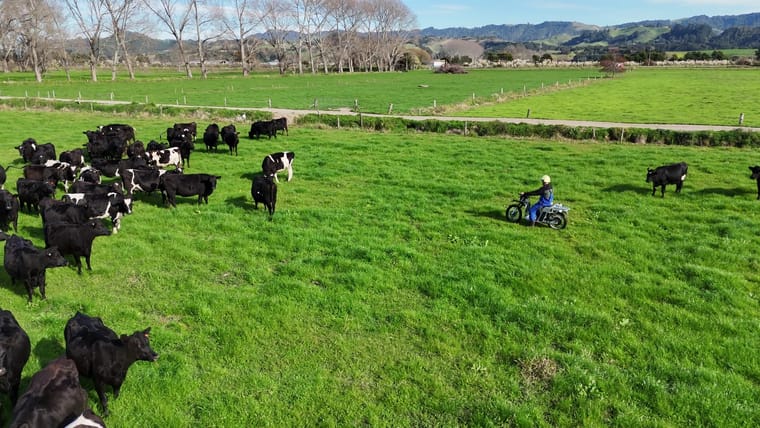
Buy a two-wheeler if the work is stock checks, break fences, gates and narrow gaps. Plenty of farms run one of each, and on a bigger property that is usually the right answer.
This is the first real decision, and it matters more than which brand you end up with. A quad and a two-wheel farm bike are not competing versions of the same tool - they are different machines that happen to do overlapping jobs.
What each is genuinely better at
A quad wins on
- Carrying weight. Four wheels and a bigger platform carry more, and carry it more comfortably.
- Towing. A trailer, a sprayer or a feed-out unit is quad work.
- Standing still on a slope. It does not fall over when you stop and open a gate.
- Shared use. Riders who are not confident on two wheels.
A two-wheeler wins on
- Narrow gaps. Race lines, tree rows, gateways a quad will not fit through.
- Wet, steep, broken ground. A lighter machine you can put a foot down on.
- Ground damage. Less weight and half the wheels on soft winter paddocks.
- Cost. Usually cheaper to buy and cheaper to keep going.
The safety question
Quad bike rollovers are a well-known cause of serious injury and death on New Zealand farms, and WorkSafe has published guidance on quad use for years. It is not a reason nobody should own a quad - it is a reason to be deliberate about who rides one, on what country, wearing what, and with what training. If a quad is the right tool for your farm, get the crush protection and the training and use it properly.
The relevant point when choosing is simply that the two machines fail differently. A quad that gets away from you on a side slope is a much bigger event than a two-wheeler you step off.
Downtime is the cost nobody budgets for. A bike that will not start on a wet morning during calving costs more than a set of tyres.
Running costs
A petrol quad carries everything a petrol bike does - oil, filters, plugs, a drivetrain - plus more of it, across four wheels and usually four-wheel drive. Tyres are four rather than two and they are not cheap. Fuel use is higher because the machine is heavier. None of this is dramatic on its own, but over the life of the machine it adds up to a real difference against a two-wheeler.
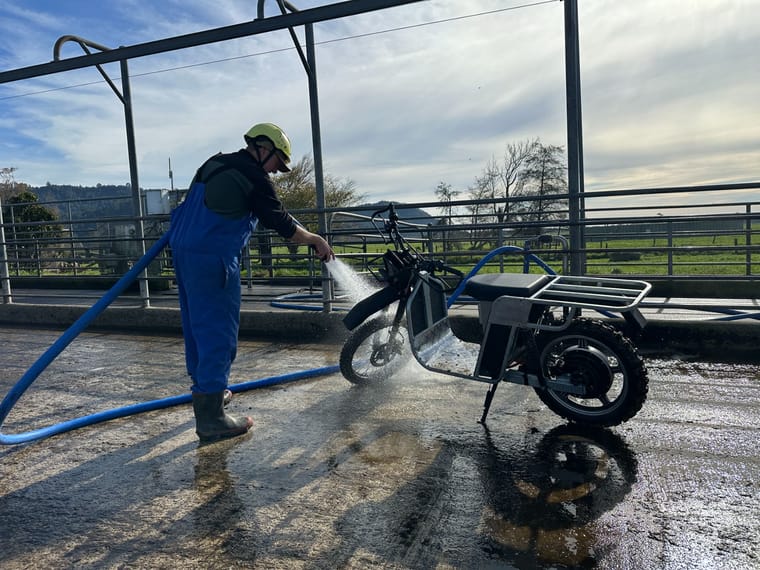
An electric two-wheeler removes most of the recurring list entirely: no chain, no clutch, no gearbox, no engine oil, no filter, no plug. Charging costs about a dollar.
Match the machine to the country
Terrain decides this more reliably than any spec sheet. A few rough rules that hold up on New Zealand farms:
- Flat dairy, race-based, gate-heavy. Two wheels, comfortably. You are stopping constantly and covering ground between stops, and a quad's advantages barely come into play.
- Rolling sheep and beef. Either works. It usually comes down to whether you are towing and who else rides it.
- Steep hill country. Two wheels for stock work, a quad only where the ground genuinely allows it. This is the terrain where quad rollovers happen.
- Orchards, vineyards, tree rows. Two wheels. A quad will not fit down the rows and that is the end of the discussion.
- Cropping and heavy carting. Quad or side-by-side. A two-wheeler is the wrong tool for moving real weight.
Think in five-year cost, not purchase price
Purchase price is the number everyone compares and the least useful one. Over five years the figures that actually separate these machines are fuel, tyres, servicing and downtime. A quad burns more fuel because it is heavier, wears four tyres instead of two, and carries a longer service list. A petrol two-wheeler sits in the middle, and an electric one sits well below both.
Downtime is the line item that never makes it onto the comparison, and it is often the biggest of the four.
Commonly asked
Can an electric bike replace a farm quad?
For carrying and towing, no - that is quad work. For the daily round of stock checks, gates, troughs and break fences, an electric two-wheeler does the job with far less to maintain and no fuel to cart around.
What about a side-by-side instead?
A side-by-side carries more people and more gear than either, with a cab and a tray. It is also the most expensive option and the least able to get through tight gaps. Worth it on bigger properties where it replaces a ute as much as a bike.
Farm bike vs quad
The full comparison, including payload, terrain and cost of ownership.
Farm bike vs side-by-side
Where a UTV makes sense instead, and where it is simply too much machine.
Decided on two wheels? Farm bikes in New Zealand covers what is available, or compare Yamaha, Honda and Kawasaki directly.
Pre-orders open
Ready to put one to work?
Built for New Zealand farms, delivered anywhere in the country.
- $7,790+ GST
- 2 yearsWarranty
- 200 kgPayload
- 50-100 kmRange
First batch sold out - taking pre-orders for March 2027 delivery.