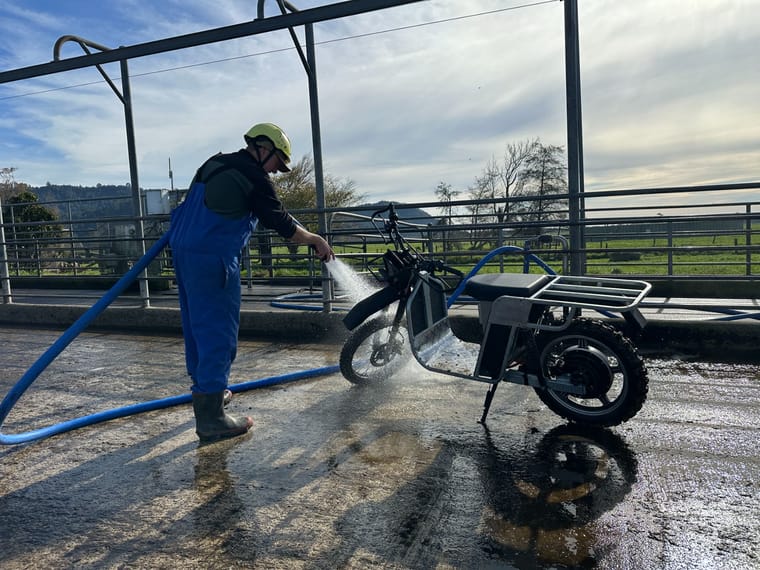
Point the hose wherever it needs to go
Sealed against dust and protected against immersion. In plain terms: you can put the pressure washer where it needs to go and stop worrying about it.
50-100km
Range
3kWh
LFP battery
200kg
Payload
40km/h
Top speed
First production run sold out at Mystery Creek Fieldays. $7,790 + GST, delivery March 2027.
A spec sheet is only useful if you know what it changes about your day.
Sealed against dust and protected against immersion. In plain terms: you can put the pressure washer where it needs to go and stop worrying about it.
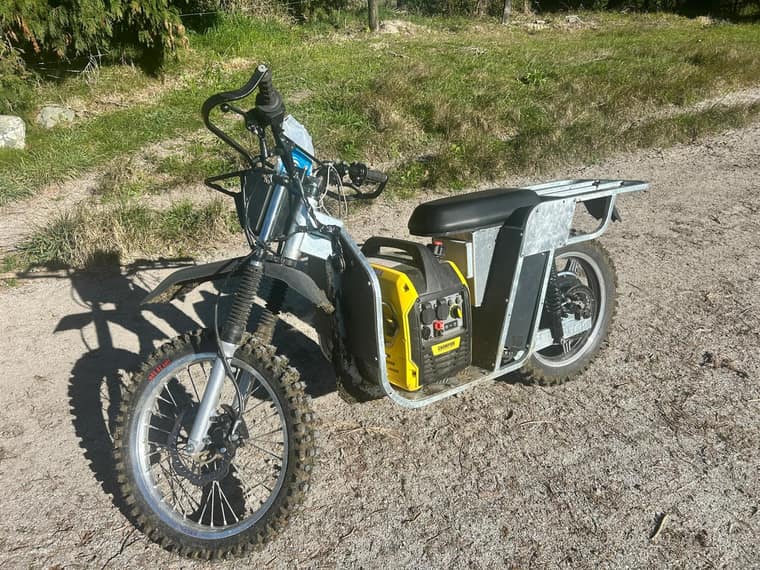
For a 95 kg farmer, that leaves roughly 105 kg for everything else. Fencing gear, a reel and standards, drenches, a chainsaw, a couple of sacks, or the heading dog that has decided it is done walking. It is a third more than the other electric farm bike sold here.
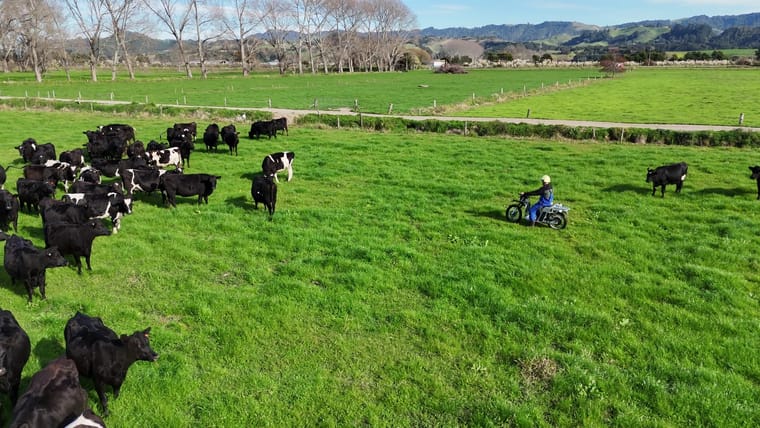
There is no chain to adjust or replace, no sprockets, no clutch plates and no gearbox. Those are the recurring jobs on a petrol farm bike, and they simply do not exist here. Full torque arrives from a standstill, so on a steep wet face there is nothing to slip and nothing to stall.
Galvanised right through - inside the tube as well as out. Paint chips, and once it does, a dairy environment gets underneath it and the rot starts. Galvanising does not work that way. This is the single biggest reason the bike is built the way it is: what finishes farm bikes in this country is not hours on the clock, it is water and effluent and the hose.
Lithium iron phosphate, chosen deliberately over lighter chemistries. LFP cells last thousands of charge cycles rather than hundreds, tolerate being run flat every day, and are markedly harder to push into thermal runaway - which matters when the bike lives in a hay shed.
No three-phase, no electrician, no dedicated circuit. The charger draws less than a jug. Plug it in after the afternoon milking and it is full before the morning one, for about a dollar.
Enough to clear ruts, races and the lip of a culvert without picking a line. The suspension is conventional - forks and twin shocks - so a rural mechanic can service it without special training.
The motor does much of the slowing, particularly on long descents. Your brake pads last considerably longer as a result, and you get engine-braking-like control going downhill without touching a lever.
No leg swing over a loaded rack forty times a shift. No clutch and no gears - twist and go. And a reverse button for the gateway you nosed into and cannot turn around in.
Pre-orders open
Built for New Zealand farms, delivered anywhere in the country.
First batch sold out - taking pre-orders for March 2027 delivery.