The New Zealand market, 2026
Farm bikes in New Zealand: what they cost and how to choose one
Every farm bike you can buy new listed here, with current prices - petrol and electric. What actually matters on a dairy farm versus hill country, and where our own bike honestly fits.
The short answer
Most farm bikes built properly for the job sit between $4,500 and $12,490. The cheapest new bike on the market is the Yamaha AG125 at $4,599 inc GST; the dearest here is the Sur-ron Ultra Bee at $12,490.
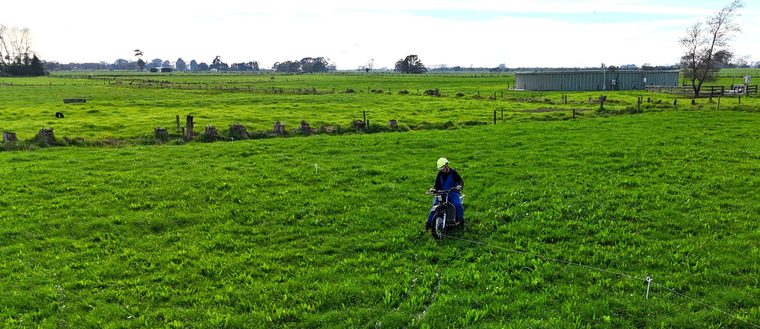
We build farm bikes for New Zealand dairy, brutally simple, pressure hose ready.
New Zealand farmers say farm bike and ag bike to mean the same thing: a two-wheeler set up for farm work rather than the road. Low gearing, carriers front and rear, a seat you can sit on for hours, and tyres that work on wet grass.
What farm bikes cost in New Zealand
New prices, GST inclusive unless noted. Retrieved 27 July 2026 from dealer listings - worth confirming with your local dealer, because these move.
| Bike | Power | Price |
|---|---|---|
| Galvbike | Electric | $7,790 + GST |
| UBCO 2X2 Work | Electric | $8,999; $9,490 with the Farm Kit |
| UBCO 2X2 Adventure | Electric | $8,599 |
| Sur-Ron Light Bee X | Electric | $7,690 |
| Sur-Ron Ultra Bee | Electric | $12,490 |
| Yamaha AG125 | Petrol | $4,599 |
| Honda XR150L | Petrol | $5,514 |
| Yamaha AG200 | Petrol | $6,956 |
| Honda XR190CT | Petrol | $7,124 |
| Suzuki DR200 Trojan | Petrol | $7,299 |
| Kawasaki KLX230R | Petrol | $7,799 |
| Kawasaki Stockman KV230 | Petrol | $7,967 |
| Honda CT125 Farm | Petrol | $8,044 |
| Kawasaki KLX300 | Petrol | $8,677 plus on-road costs |
Most bikes built properly for farm work sit between $7,000 and $9,000. What separates them is what you spend after you buy it.
Against the other electric farm bike
| Galvbike | UBCO 2X2 | |
|---|---|---|
| Payload, rider included | 200 kg | 150 kg |
| Warranty | 2 years | 12 months |
| Charge time | 4-5 hrs | 4-6 hrs |
| Frame | Hot-dip galvanised steel | Not galvanised |
| Chain, gearbox or clutch | None | None |
Petrol or electric?
This is the real decision, and it is much less about the technology than about how your farm is shaped.
Petrol’s advantage is one thing: range. A tank goes further between stops. That is the whole of it - and on a dairy platform doing 15 to 25 km a day, it is an advantage you never actually use.
Everything else favours electric. A charge costs about a dollar, the whole petrol service schedule stops applying, and there is no cold-morning starting. Those are not small conveniences - they are the jobs and the bills that make up the real cost of running a farm bike.
Range is the one number to check. Ours does around 80 km on flat country - on the average 160-hectare dairy farm that is two to three days of work between charges, and it charges off a standard socket in four to five hours while you are asleep.
What a day actually looks like
Cups on, breaks shifted, troughs and fences checked, gates opened forty times. On a typical dairy platform that is 15 to 25 km. That is two to three days of range, and the bike charges overnight off a normal 10 amp socket for about a dollar.
Choosing by the work, not the spec sheet
Farm bikes get sold on engine size. On most farms that is close to the least important number.
Dairy, flat to rolling
Short repeated runs, dozens of gate stops, mud and washdown. Ease of getting on and off matters far more than power. Step-through frames, low seats and no clutch earn their keep here every single day.
Sheep and beef, hill country
Steep climbs are where electric shines - full torque from a standstill, no clutch to slip, no stalling halfway up. Check your longest muster against the range figure and size it from there.
Orchards and vineyards
Flat, narrow rows, low canopy, work happening near people. Quiet and fumeless matters more here than anywhere else. Ground clearance and width matter more than speed.
Lifestyle blocks
A few hectares, occasional use, often a shed with power and no fuel stored on site. Range is a non-issue. Something that starts first time after sitting for three weeks matters a lot.
Several riders
If staff or family of different sizes will ride it, seat height and weight beat engine size. A bike somebody can hold up at a gate is a bike that gets used.
Carrying gear
Check payload including the rider, not just the rack rating. A 200 kg payload with a 95 kg rider leaves about 105 kg - which sounds like a lot until you load fencing gear and a dog.
Why farmers choose the Galvbike
We did not adapt a trail bike. We built a machine for the way a dairy farm actually runs - and five things follow from that.
Payload
Including the rider.
2 yrWarranty
Manufacturer’s cover, plus your Consumer Guarantees Act rights.
0Service jobs
On the annual schedule.
Nothing to service
No chain to adjust or replace. No clutch to burn out. No gearbox, no oil, no filter, no plug, no carburettor. Those are the jobs that make up the real cost of a petrol farm bike, and on ours they do not exist. Brakes, tyres and the occasional grease nipple is the list.
Built for the wash-down, not the showroom
The frame is hot-dip galvanised steel and the motor is rated IP67. What kills farm bikes in this country is not hours, it is water, effluent and the pressure washer. Every other bike on that list is painted steel. Ours is galvanised right through, inside the tube as well as out.
It carries more
200 kg including the rider - a third more than the other electric farm bike on the market. Big footwell, big rear deck. Fencing gear, dog tucker, drenches, a chainsaw, or the heading dog that has decided it is done walking.
Anyone on the farm can ride it
Full step-through, so nobody is swinging a leg over a loaded rack forty times a shift. No clutch and no gears - twist and go. And a reverse button, which sounds like a gimmick right up until the first time you nose into a gateway you cannot turn around in. A new staff member is useful on it in five minutes.
Torque where you need it
An electric motor makes full torque from a standstill. On a steep wet face there is no clutch to slip and nothing to stall - you just twist. Regen braking holds you back on the way down and saves the brakes doing it.
Two years, not twelve months
The question every farmer asks about an electric bike is whether it will still be working in a few years. We answer it with a two-year manufacturer’s warranty - twice what the other electric farm bike offers - plus your rights under the Consumer Guarantees Act on top.
Compare the bikes directly
Specs, prices and the honest case for each one.
vs Yamaha AG200
The bike most NZ farms already run, and the price everything gets measured against.
vs UBCO 2X2
The other electric farm bike. Two-wheel drive and a dealer network against payload and warranty.
Farm bike vs quad
Two wheels or four. What WorkSafe actually says, and where each one genuinely fits.
Electric vs petrol
Running costs, servicing, range and the things that do not show up on a spec sheet.
vs Honda XR150L
Honda’s volume farm bike, and 17 kg heavier than you might expect.
All comparisons
Every bike we compare against, side by side.
The second run is open for pre-order.
First production run sold out at the event - Mystery Creek Fieldays. $7,790 + GST, delivery March 2027.
Common questions
What is the difference between a farm bike and an ag bike?
Nothing - they are the same thing, and New Zealand farmers use both terms interchangeably. "Ag bike" comes from Yamaha's AG series, which has been the default farm bike here for decades.
What size farm bike do I need?
For most dairy work, engine size matters far less than gearing, seat height and how easy the bike is to get on and off. A 125 is enough for flat farm running. Sheep and beef country, long distances or heavy loads are where the bigger 200-plus machines earn their keep. If several people of different sizes will ride it, seat height and weight matter more than power.
Do I need a licence or a WoF for a farm bike in New Zealand?
For use only on your own land, generally no registration, no warrant and no licence is required. The moment the bike touches a public road - including crossing one between blocks - the rules change and registration, a helmet and an appropriate licence come into it. The requirements differ depending on how the specific machine is classified, so check with NZTA or your dealer for the bike you are buying rather than relying on a general answer.
Pre-orders open
Ready to put one to work?
Built for New Zealand farms, delivered anywhere in the country.
- $7,790+ GST
- 2 yearsWarranty
- 200 kgPayload
- 50-100 kmRange
First batch sold out - taking pre-orders for March 2027 delivery.